


Where Products Find meaning
Every product carries a story.
Most businesses discover that story too late.
We help businesses develop products whose story is clear from the start.
HOW IT WORKS
Most teams don’t struggle with building products.
They struggle with aligning what they build with what it means and how it’s understood in the market.
That gap is where products lose clarity.
This is how we close it.
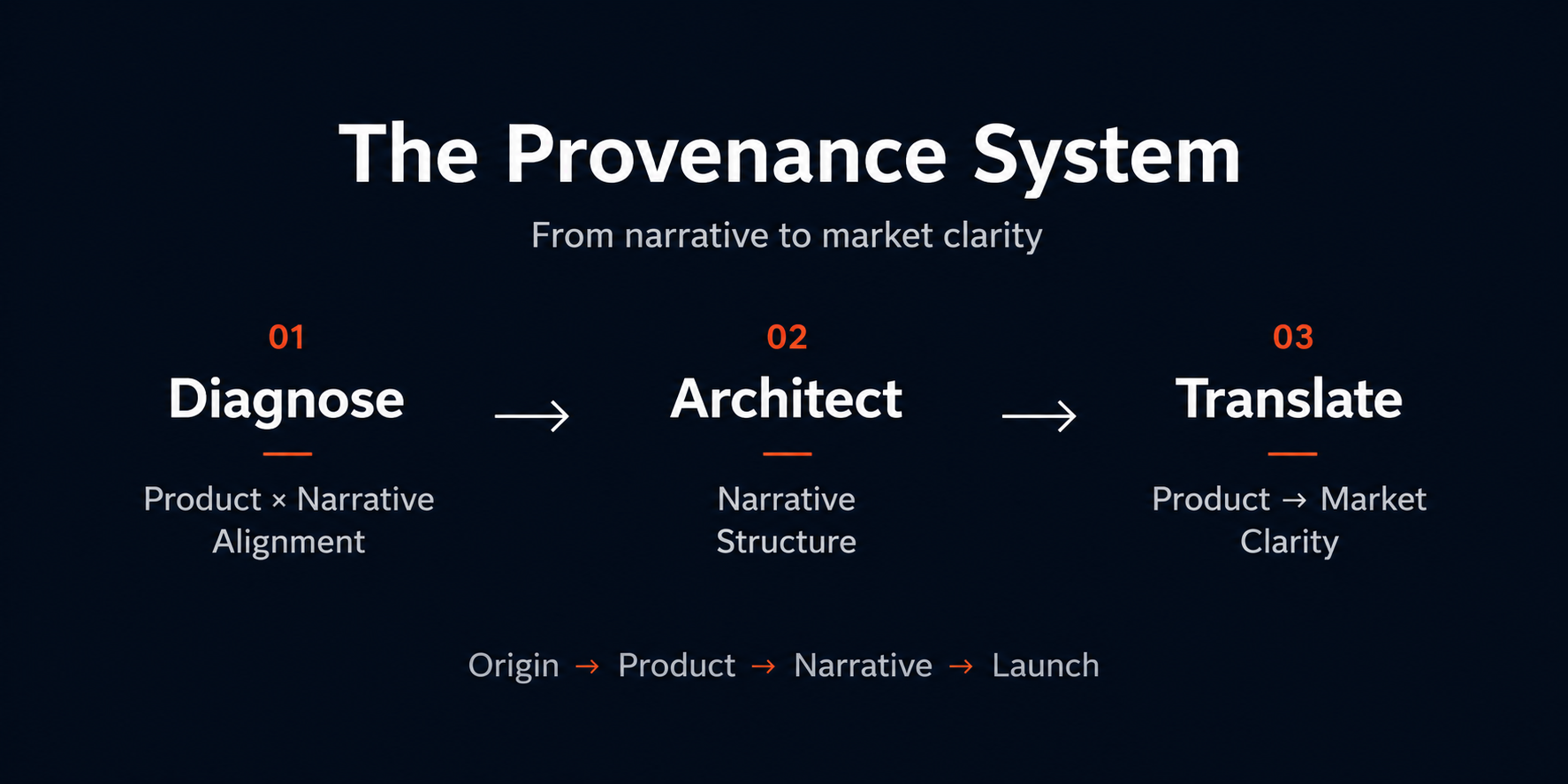
Step 1: Diagnose
Find where product and narrative are misaligned
Before changing anything, we map the current state:
What the product is designed to do
What the team believes it represents
How the market is likely to interpret it
In most cases, these are not fully aligned.
This step surfaces the gaps early—before they become expensive to fix.
Step 2: Architect
Build the narrative structure first
Once the gaps are clear, we define the structure that should guide the product:
Core narrative (what this is really about)
Positioning logic (why it matters, and to whom)
Product-story alignment (how features support meaning)
This becomes the foundation the product is built—or rebuilt—around.
Step 3: Translate
Connect product to market with clarity
With structure in place, we translate it into how the product shows up:
Messaging and language
Go-to-market positioning
Launch narrative
The goal is simple:
When the product reaches the market, its meaning is already clear.
Most teams build first, then try to explain.
We reverse that.
So the product doesn’t need to be explained later.
It’s understood from the start.
Who This Is For
This work is most valuable when the product, and its meaning, are still being shaped.
Founders building something new
You’re early enough to define what the product represents, not just what it does.
This ensures the product and its story are aligned before launch.
product development teams
You’re introducing something new, but the positioning isn’t fully clear.
This work creates a structure that connects product decisions to market meaning.
Organizations repositioning existing products
The product exists, but how it’s understood in the market needs to change.
This work helps realign what the product is with how it’s perceived.
Who this is not for
Teams looking only for messaging after the product is finalized
Organizations seeking execution without rethinking structure
Projects where positioning is already fixed and not open to change
This work is most effective when there’s still room to shape the product—
not just describe it after the fact.
in practice
Most teams don’t realize the gap until after the product is built, but the meaning isn’t clear.
For example, a team may build around a set of features, only to realize late that the product doesn’t clearly signal who it’s for or why it matters.
Here’s how that shows up, and how we approach it differently.
The typical path
A team builds a product around features, functionality, and internal priorities.
As launch approaches, they begin asking:
How do we position this?
What’s the story?
Why does this matter?
At that point, the product is already defined.
The narrative has to fit the product, whether it fully aligns or not.
Our approach
We start earlier by defining:
what the product represents
why it matters
how it should be understood in the market
That structure then informs:
product decisions
positioning
how the product is introduced
What changes
The product is developed with its meaning already in place
Features support the story
Positioning reflects the structure
The market understands it more quickly
The difference isn’t in how the product is marketed.
It’s in how early the story is defined and how consistently it shapes what gets built.
Examples
Early-stage product
A founder is building a new product.
The concept is strong, and early development is underway.
But the story behind it is still forming:
What does this really represent?
Who is it for at the core?
Why does it matter beyond the features?
Without that clarity, product decisions begin to drift.
Features are added, but the meaning behind them isn’t always consistent.
Approach
We define the narrative structure early:
what the product represents
the role it plays in the market
how it should be understood from the start
That structure then guides product decisions as development continues.
Outcome
Instead of refining the story at launch,
the product is built with its meaning already in place.
Positioning becomes clearer, faster, and more consistent.
existing Enterprise
An organization has an established product.
It performs well, but over time, how it’s understood in the market has become less clear:
messaging has expanded in different directions
positioning varies across teams
the product no longer signals a distinct role
The product exists—but its meaning has drifted.
Approach
We step back and define a clear narrative structure:
what the product represents now
how it should be positioned moving forward
what to emphasize, and what to leave behind
This creates a shared foundation across teams.
Outcome
The product is reintroduced with greater clarity:
messaging aligns across functions
positioning becomes more focused
the market understands it more quickly
In both cases, the goal is the same:
To ensure the product and its meaning are aligned, early enough to shape what gets built, or clearly enough to redefine how it’s understood.
start with clarity
If you’re building something new or trying to reposition what already exists—
this work helps ensure the product and its meaning are aligned from the start.